


For many of us, AI was long seen as the ultimate technological goal, the pinnacle of what computing and human ingenuity could achieve.
Today, it feels like the biggest technical barriers have fallen. The challenge is no longer about whether AI works, but about how we deploy it successfully and responsibly.
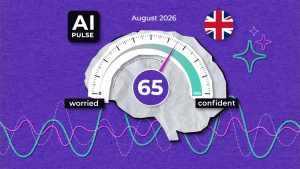
In our latest Expleo AI Pulse, we asked people in the UK, France and Germany how they felt about the use of AI to monitor productivity and performance in the workplace. The results revealed a clear split: concern was significantly higher in the UK, at 56%, compared to 38% in France and Germany. This isn’t the first time we’ve seen such a divergence.
These are three countries of similar size, with closely connected economies and histories. So why the difference?
Well, it’s the people.
Or more precisely, the context those people operate in. Cultural attitudes, regulatory environments and current economic conditions all shape how AI is perceived and accepted.
Take France and Germany. Their robust labour frameworks, strong data protection laws and emphasis on worker participation tend to shield employees from the more invasive fears around AI. In these settings, AI is seen less as a threat and more as a practical tool that complements human work.
The UK tells a different story. The Office for National Statistics reports a 1.3% fall in job vacancies in Q3, marking the 39th consecutive period of decline. Unemployment has reached a post-pandemic high. Economic confidence has softened, and that inevitably shapes how people view emerging technologies like AI.
This is just one example, but it offers valuable lessons for how we think about the implementation of AI in the workplace.
First, AI should be additive. It must amplify people, not constrain them. Think of it less as a replacement and more as an Iron Man suit: technology that enhances human capability, creativity and confidence. If people feel it encroaches on their autonomy, they will resist it, no matter how advanced it becomes.
Second, AI deployment must be contextual. The technology might be universal, but its introduction and adoption should reflect the culture it enters. There is no one-size-fits-all approach. The underlying tools may be the same, but the people are always different.
Last month I mentioned how AI is moving from promise to infrastructure. This is the natural next step. The technology is ready. Now, the real challenge is not what AI can do, but how it fits and thrives alongside people.