


- Expleo AI Pulse research finds that UK business leaders’ trust falls sharply as AI moves from routine workplace tasks to autonomous decision-making
- 73% of UK business leaders trust AI to summarise emails, documents and meeting notes, while 72% are comfortable using AI to organise calendars and schedule meetings
- Trust in autonomous AI falls to 54% for decisions made within predefined guardrails and 43% for financial or budget approvals
- UK business leaders are most cautious about using AI for higher-risk decisions, with 43% uncomfortable about its use in hiring or HR decisions and 46% uncomfortable about strategic business decisions
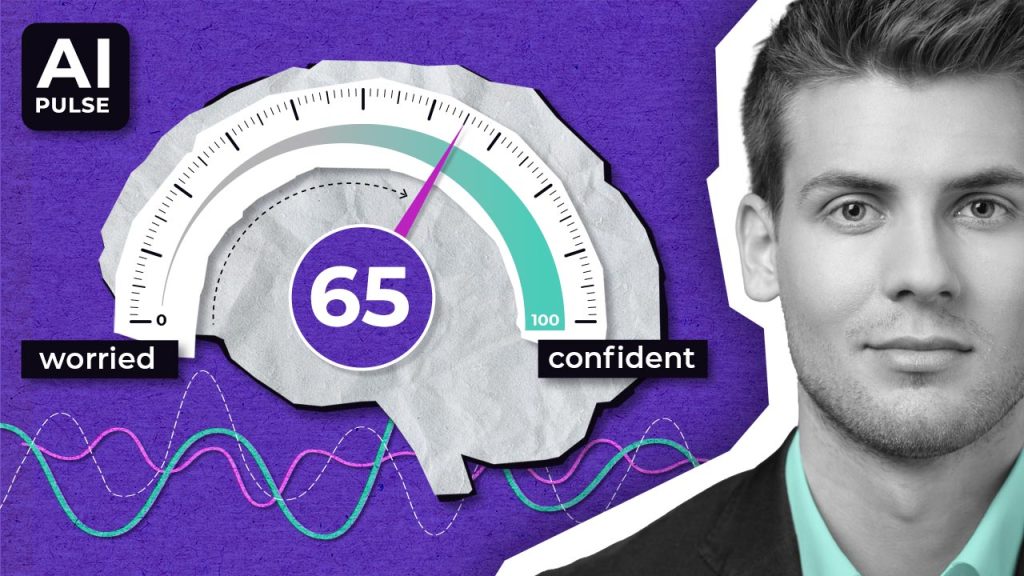
- UK confidence in organisations’ ability to use AI successfully rose from 62% to 67%, while the Expleo AI Pulse sentiment score increased from 63 to 65
London, UK, 18 August, Expleo – New research from Expleo, the engineering, technology and consulting services provider, reveals an ‘AI autonomy cliff’ among UK business leaders, with trust falling sharply when AI moves from supporting routine workplace tasks to making higher-stakes decisions.
Nearly three quarters (73%) trust AI to summarise emails, documents or meeting notes. But confidence drops to 54% when AI makes decisions within predefined rules or guardrails, and to 43% when it approves financial or budget-related transactions.
Comfort remains relatively high when AI plays a lower-risk supporting role: 72% are comfortable using it to organise calendars and schedule meetings, 65% with it approving low-risk administrative actions, and 64% with it prioritising tasks and recommending next steps.
Caution is greatest where decisions could have lasting financial, personal or organisational consequences. While 54% are comfortable with AI making decisions within predefined rules or guardrails, this falls to 43% for financial or budget-related approvals. Meanwhile, 43% are uncomfortable about AI making hiring or HR-related decisions, rising to 46% for strategic business decisions.
Jeff Hoyle, EVP and MD UK at Expleo, said: “The greater the consequence of a decision, the more proof leaders need before handing it to AI. A poor summary can be spotted and corrected quickly; a flawed financial or employment decision may be much harder to reverse.
“Businesses need to be clear about where AI can act independently and where a person must remain accountable. For higher-risk uses, that means agreed approval points and a clear record of how each decision was reached.”
The caution around autonomous decision-making comes despite a broader improvement in UK attitudes towards AI. Following the previous month’s tracker low, the overall Expleo AI Pulse sentiment score increased by two points, from 63 to 65.
Confidence in organisations’ ability to use AI successfully rose from 62% to 67%, excitement about its opportunities increased from 63% to 65%, and trust in organisations to use AI ethically climbed from 69% to 74%.
At the same time, concern about how AI is transforming organisations rose from 35% to 39%. Cybersecurity remains a prominent concern, with 59% worried about the risks AI poses to organisations, up from 58%.
Hoyle added: “The findings demonstrate that trust falls away when AI moves into higher-stakes decision-making. It can support people with routine, reversible tasks, but when a decision affects someone’s job, a company’s finances or its strategic direction, human judgement and accountability must remain central.
“That principle is especially important in defence and other safety-critical or highly regulated environments, where the consequences of error can be severe. AI may inform or accelerate a decision, but the organisation must demonstrate that the system is reliable, understand how it reached its output and keep a suitably qualified human in the loop with the authority to challenge or override it.”